



Home Projects SPrinTronics

SPrinTronics

1


For a few recent years, inkjet printing has been used as a process to shape up materials. Indeed, its digital, additive, contactless and multi-materials features, in addition to a high accuracy, have aroused strong interest from industrial sectors devoted to electronics. The reliability of office desktop inkjet printers, as well as those used in graphic industry, has permitted to think that transposition for functional materials deposition would be fast. That is the reason why, many graphic printers suppliers have built an offer for deposition equipment based on a graphic approach, which required materials adaptation and components designs to be manufactured. This top-down approach based on already pre-existing technology, mostly ended in a failure during the 2001-2006 period, slowing down or cancelling a great number of R&D programs and therefore the first printed electronic products market launching.

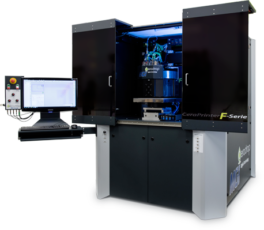
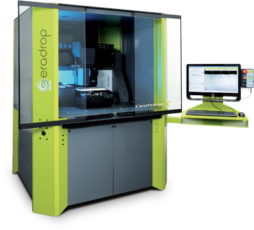
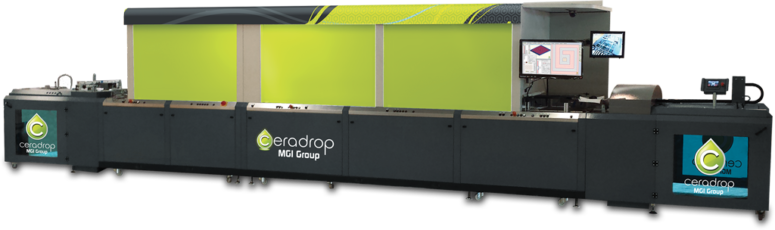
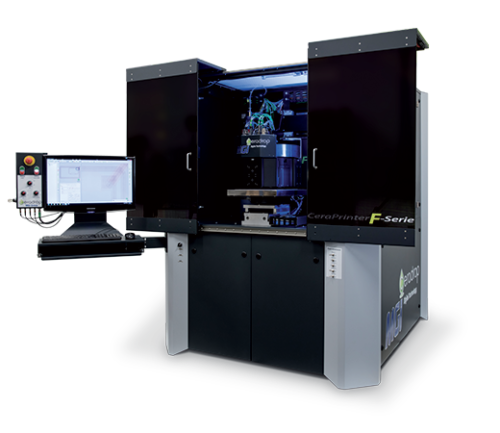
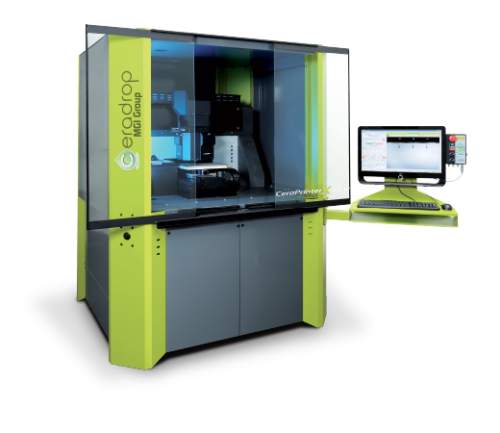
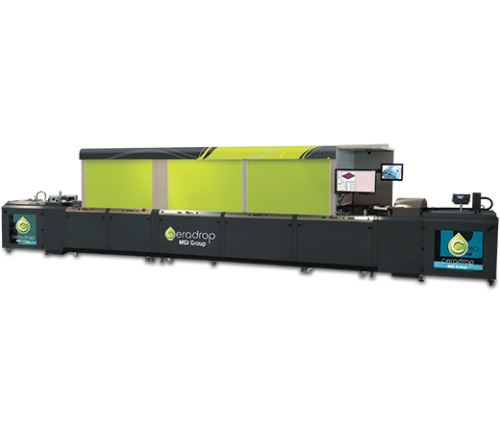
Considering this fact and in order to offer an innovative approach of components manufacturing by inkjet printing, CERADROP has worked differently from the opposite side. Doing so, based on the valid assumption that difficulties would come from materials and designs complexity (3D, multi-layers, multi-materials) rather than from machines, CERADROP has developed a printing equipment with a bottom-up vision, in other words, by defining a new concept of equipment, which is able to adapt itself to specific constraints brought by materials and customer designs to be printed. Moreover, CERADROP has developed know-how in inks formulation dedicated to electronic ceramics (metal refractory inks, ceramic inks) to permit technology enabling in niches markets.

Nowadays, the advantages of inkjet printing process (multi-materials, digital, additive and contactless technique), the first realized components and the know-how level reached by research groups allow to plan an industrial growth, under the availability of strong innovation in inks formulation (to make them more efficient and reliable), in printing equipment throughput and interface to make them faster and in components design for manufacturing, to gain in functionality.

To answer to these needs and to reach the critical point allowing large volumes manufacturing that the SPrinTronics project is forming a complementary consortium, in a technological and value chain, offering breakthrough innovations in materials, inks formulation and equipment in four industrial sub-domains with strong added value and with strong ties between them.

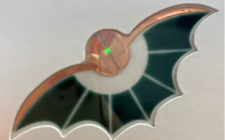
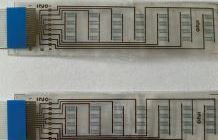
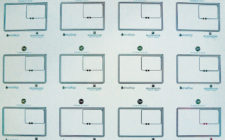
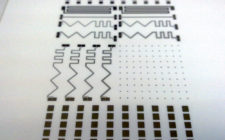
These four industrial domains are: ceramic thick films, multilayer ceramic capacitors (MLCC), 3rd generation photovoltaic (OPV), microelectronic packaging, and interconnections. The following common points can be underlined, which will be shown and detailed in the dossier:

  • The feasibility of components by inkjet printing has been proven,
  • Industrial demonstrators must be accomplished with appropriate materials to finalize the specifications of the production tools,
  • The concerned demonstrators are multi materials,
  • The inkjet printing process introduces a breakthrough innovation on one or several levels,
  • The targeted markets require more and more digital manufacturing processes to gain in flexibility,
  • The geometry of components and outputs to be reached demand to up-scale a current inkjet printing technology towards single-pass, non-graphic-style printing, adapted for electronics and functional materials,
  •  The manufacturing is sheet to sheet instead of roll to roll.

After the stage of specifications, strengthening these large technological stages, will allow to implement innovations in inks formulation and deposition methods, to carry out functional demonstrators and to activate the inkjet printing single-pass technology dedicated to high added value printed electronics components, and gain the knowledge required for industrial implementation.


2


Copyright © 2010 CERADROP